


Import and export goods inspection companies
کنترل عملیات لاشینگ کانتینرها (Container Lashing Control)
Lashing is a set of actions that are taken to restrain and stabilize containers on a ship or trailer so that they do not move against the force of wind, waves, vibration, acceleration, braking and dynamic movements..
Accurate control of this operation is one of the most sensitive tasks in safety It is sea and port transportation.
۱. Inspection before starting work
Checking the health of lashing bars, screws, hooks and rods
Ensure no rust, cracks or deformation
Compliance of equipment with IMO standards and ship class
۲. Checking the arrangement of containers
Ensuring the correct placement of containers on the shelves
Control of Twist Locks (Correct lock and unlock)
Checking the center of gravity, elevation and dangerous loads (DG Cargo)
۳. Execution of lashing according to the loading plan (Stowage Plan)
Fastening and tension adjustment of rods, turnbuckles and bridgefits
Adhering to the proper angle of restraint (Usually 30 to 60 degrees)
Using standard equipment with capacity (SWL) suitable
۴. Final control after completing the operation
Checking the uniformity of the stiffness of the restraints
Make sure there are no loose or loose points
Record operations in the ship's logbook or PMS system
Reporting to Chief Officer or Cargo Supervisor
۵. Periodic monitoring during the trip
Scheduled visit when the sea state changes.
Retightening lashings in Sea Passage or when entering rough waters.
Accurate lashing, especially in new generation container ships that load up to 10-12 containers high, is one of the key factors of stability, safety and preservation of cargo value. Without proper control, the smallest error can lead to major accidents.:
Container falling into the sea
Damage to the ship's hull or surrounding structures
Creating large insurance losses
Shifting cargo and disturbing the balance of the ship
Danger to crew and equipment on deck
Import goods inspection services:
- Pre-shipment inspection (PSI) in the country of origin
- Quality control, quantity, packaging, marking and compliance with the purchase order.
- Sampling and testing
- Physical, chemical, mechanical and functional tests according to reference standards.
- Control of import documents
- Invoice, packing list, bill of lading, certificate of origin, COA/COC, compliance with Incoterms .
- Issuance of inspection certificate (COI/IC)
- Required by banks, insurance and customs.
- Inspection at destination
- Discharge monitoring, counting, damage checking and deficit/defect reporting.
Unloading bulk containers (Bulk Containers Unloading)
evacuation Bulk containers to the process of exiting bulk materials (Powder, granular or granular) It is said from the container without separate packaging. This operation is carried out in ports, silos and logistics centers with the aim of speed, safety and reducing product loss.
Common methods of unloading bulk containers:
Gravity discharge (Gravity Discharge)
Evacuation with mechanical equipment
Pneumatic discharge (Pneumatic Unloading)
Tilt or overturn Container (Container Tilter)
This unloading method is used for bulk items such as grain and animal feed, cement and minerals, powdered chemicals and polymer granules..
Product inspection, pre-shipment inspection, source inspection, standard inspection

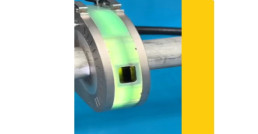
Orbital Welding
Weld inspection and non-destructive NDT tests
Orbital welding is an advanced and fully controlled automatic welding method in which the welding torch rotates 360 degrees. (Orbit perfect) rotates around the pipe or cylindrical part, while the part remains stationary.
- This technology has been developed to achieve uniform, repeatable quality without depending on the skill of the operator. Orbital welding is a key technology in industries with high quality requirements, which enables complete control of the welding process by eliminating the human variable, and has practically become an industry standard in sensitive projects.:Oil, gas and petrochemical industries
Pharmaceuticals and biotechnology
Food and dairy industries (Hygienic Welding)
Power plants and heat exchangers
Small to medium diameter stainless steel pipelines
Orbital welding is a specialized type of welding where the torch is mechanically operated through a 360-degree rotation in a continuous process (Two to 180 degrees or four to 45 degrees) It revolves around a static piece, like a tube.
In Orbital Welding which is one of the TIG processes (TIG) is, rotary welding is done by automatic torch, and all the movement of rotary torch, both in terms of filling and rotation and welding, is done fully automatically..
Orbital welding can be done with or without filler. welding Orbital is a type of welding that is controlled by a computer and the intervention of the operator in welding is zero, so that a uniform and error-free welding can always be achieved with quality And safety achieved high.
With the increasing need of advanced industries for connections with high reproducibility, uniform quality and minimal human error, traditional welding methods are no longer responsive to technical requirements.. Meanwhile, as an engineered and semi-automatic/automatic technology, orbital welding plays a key role in sensitive industries such as oil and gas, petrochemical, pharmaceutical, food, power plants, and semiconductors..
Orbital welding not only improves the metallurgical quality of the joint, but also enables precise control of process parameters, complete documentation and advanced inspection..
Orbital welding is a process in which the welding arc (Usually TIG/GTAW) It rotates 360 degrees around a pipe or joint with controlled speed and parameters, while the workpiece remains stationary. In this method, the hand movement of the welder is eliminated and the quality of the weld depends on the machine's engineered settings rather than individual skill..
The main components of the orbital welding system:
Smart power supply (Power Supply) Programmable
Orbital head (Open Head یا Closed Head)
Tungsten electrode with controlled geometry
Protective gas supply system (Argon / Helium Mix)
Digital controller with the possibility of data recording (Data Logging)
Types of orbital welding
1. Orbital with closed head (Closed Head)
Suitable for small diameter pipes and clean environments (Clean Room)
No filler metal
Widely used in pharmaceutical and semiconductor industries
2. Orbital with open head (Open Head)
Suitable for larger diameters
The possibility of using filler wire
Common in oil, gas and power plant industries
Technical and engineering advantages
✅ Very high repeatability
Accurate control of input heat (Heat Input)
✅ حداقل HAZ و کاهش تنشهای پسماند
✅ کاهش آلودگی و اکسیداسیون ریشه جوش
✅ قابلیت مستندسازی کامل فرآیند جوش
نکات متالورژیکی خاص در جوشکاری اوربیتال:
- توزیع یکنواخت حرارت باعث ریزدانگی ساختار جوش
Reducing the possibility of Hot Cracking in alloy steels
Better penetration control (Penetration) In thin tubes
Excellent performance in welding duplex and super duplex stainless steels
Inspection and quality control in orbital welding
One of the main strengths of this method is the ability to control and monitor quality in an engineered way.
1. In-process control (In-Process Monitoring)
Record voltage, current, rotation speed and time
Detection of arc instability at the moment
Traceability for each welding pass
2. Non-destructive inspections (NDT)
VT (Detailed visual inspection) With a borascope
Digital RT to check penetration and porosity
Advanced UT (PAUT/TOFD) At higher diameters
Leak Test in pharmaceutical and food industries
3. Metallurgical and mechanical tests
Macro H (Macro Etch)
Tough test (HV)
Investigation of HAZ structure
Tensile and bending test (In PQR)
Important related standards
ASME Section IX
ISO 15614
ISO 9606
AWS D18 (Special for health industries)
Special and less mentioned applications of the orbital welder:
Ultra pure gas transmission lines (Ultra High Purity)
Vacuum systems in space industries
Hydrogen fuel lines
Precision heat exchangers
Welding inspection, technical inspection, piping inspection
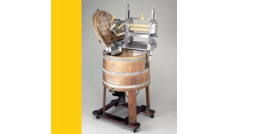
A look at the operation of the washing machine - late 19th century..
Home Appliances
In the late 19th century, the washing machine took its first steps as a semi-automatic mechanical device.. These machines were mostly purely mechanical, powered by hand, belt or, later, rudimentary electric motors..
In 1851, American James King invented and patented the first washing machine using a rotating drum.. The drum was partially filled with water. Seven years later, in 1858, another American named Hamilton Smith built and patented the first washing machine with a rotating drum.. Historians claim that these machines were the first modern washing machines. In 1861, the ability to soak clothes Washing machines added.
Clothes were placed in a metal or wooden tub and washed by vanes, oscillating arms, or a simple drum.. The reciprocating or rotating movement caused mechanical agitation in the water and soap; A process that separates dirt from fibers.
In 1874, William Blackstone, an American businessman, built a machine that would remove dirt from clothes and wash them as a birthday present for his wife.. This device consisted of a wooden tub in which there was a flat piece of wood containing six small wooden pegs. Dirty clothes were hung on wooden pegs and spun in hot soapy water.. Not long after, Blackstone began manufacturing and selling this $2.50 device.
This physical principle is the same concept that is known today as Agitation. Draining water and draining was completely manual and to get the water from the clothes from pressure rollers. (Wringer) was used; Two cylinders between which clothes were passed to remove excess water. Although this part was simple, it was dangerous in terms of safety and later led to the design of safer systems.
In 1907 AD, Alva J. Fisher first Electric washing machine invented in the United States. This machine was called the Thor and was sold by the Hurley Machine Company in Chicago. The said machine was accompanied by a drum, and the blades lifted and washed the clothes by rotating the drum..
As Thor revolutionized the laundry business, other companies focused on consumer markets. Among these companies was Maytag, which started with the production of agricultural tools; But gradually he introduced the wooden washing machine in 1907. In 1911 AD, another famous company called Whirlpool started producing a machine with a rotating drum and an electric motor..
From the point of view EngineeringThese machines were an example of replacing human energy with simple mechanical mechanisms. There was no temperature control, automatic timing, or high-powered motors yet, but these designs were groundbreaking Washing machines They modernized and showed how Engineering It can gradually transform daily tasks.
After-sales service, inspection, standardization
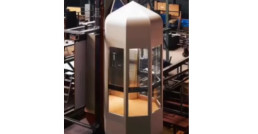
A look at the history of the elevator ...
elevator
1874 AD (1252 solar) It is a turning point in the history of the elevator; When the elevator changed from a simple lift to a safe and reliable vertical transportation system, it paved the way for the growth of tall buildings..
1874 AD, the beginning of the era of safe elevators:
Otis company introduced the first safe hydraulic elevators. Use of safety brake system (Safety Brake) It prevented the cabin from falling if the cable broke. This innovation increased public trust in the elevator.
1880s (1258 solar)The birth of the electric elevator:
In 1880, Werner von Siemens built the first all-electric elevator. Eliminating steam and hydraulic power led to an increase in speed, height and productivity, and laid the foundation for the formation of skyscrapers..
Elevator inspection
1920s, standardization and urban growth:
Introduction of DC motors, pulley system and balance weight and development of sliding doors and basic control systems
1930s, progress in safety and mechanics:
Development of speed governor, improvement of brake system and cabin guide
Increased capacity and available height
1950s, the revolution of AC motors:
Replacing AC motors instead of DC, reducing maintenance costs and increasing life span, smoother movement and less energy consumption of elevators.
1970-1980s, electronics and automation:
Introduction of advanced electronic and relay controls, optimization of waiting time and group management of elevators, development of high-speed elevators for tall towers.
1990s, digital control:
Using microprocessors and PLC, error detection, intelligent monitoring and safety, increasing the stopping accuracy and comfort of elevator movement.
21st century, smart and green elevators:
Gearless motors (Gearless) High efficiency, energy recovery system (Regenerative Drive)High-speed elevators (+10 m/s) And
New technologies like MULTI (Movement without cables)
Since 1874, the elevator has evolved from a risky mechanical lift to a smart, safe, and energy-efficient vertical transportation system. The progress of elevators is directly tied to the development of mechanical, electrical, control, and material engineering, and without it, modern architecture would be practically impossible..
Periodic inspection, elevator, standardization
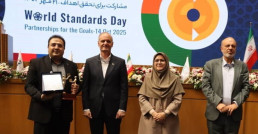
Another honor for Fahame:Received the model unit statue and commendation certificate as a national conformity assessment institution from the National Standards Organization of Iran
Once again, during the ups and downs 33 years of activity of the company in the field of conformity assessment, inspection and standardization of manufactured and service products of the country, as a partner inspection company of the National Standards Organization of Iran and certified by the National Center for Certification of Iran (NACI) Based on Iran's standard requirements – ISO IEC 17020 proud of Get the title “Model conformity assessment body” We became national level!
This great success would not have been possible without the compassion and commitment of the employees, managers and experienced inspectors of Fahameh Industrial Engineering Company, therefore, we would like to express our gratitude to Fahameh Company for their trust. National Iranian Standards Organization As the custodian of the country's standardization, which makes our responsibility heavier, we announce and express our gratitude to all Fahame stakeholders, including our shareholders, employees and technical managers..
With a double effort and with a firm will, in the way of upliftment of our dear country Iran, by fulfilling our inherent duties. (Inspection, quality control, conformity assessment and standardization) We will take our firm steps and continue moving along this long path.
Fahame, protector of quality and capital
In the event of World Standard Day (21 stamp 1404) which was held in the summit hall with the presence of the President, the head of the National Standards Organization of Iran, the Minister of Peace, the heads of the parliament's industries and mines and education and research commissions, and a group of national officials, university professors, experts, former presidents of the standards organization, and activists of the standards system in the summit hall..
Fahameh, selected by the National Standards Organization of Iran as a model conformity assessment institution at the national level
Inspection company, conformity assessment, sample unit, product inspection
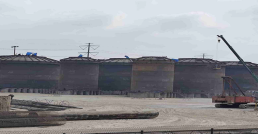
About the construction project of phosphoric acid factory by Tamamam company
About the construction project of phosphoric acid factory by Tamamam company
company (supplement) Engineering and development of Iran's national copper industries, (The main employer of this project)As a development management company that focuses on the development of copper manufacturing industries of the copper industry, it operates and manages relevant development projects as a representative of the National Copper Company..
Bandar Abbas Phosphorus Acid Plant Project With annual production of 6,000 tons of phosphoric acid and byproducts including Alf2, Gypsum, i1, PPA in the Persian Gulf Special Economic and Minerals Special Zone, from February 1402 Began to be running and completing.
The plant is downstream of the cathode production chain and will be constructed with the aim of consuming one million tons of sulfuric acid manufactured by the copper company, producing 6,000 tons of phosphoric acid, which will provide an important part of the agricultural need for phosphate fertilizers and provide food security in the country..
Industrial engineering company Fhamh, Is proud to be in this large project as a service contractor TECHNICAL INSPECTION , Third person construction of phosphoric acid plant and side units of Persian Gulf Economic Zone - Abbas (Inclusive Inspection services and tests during construction and final equipment in and out of the country) , Has partnerships and cooperation.
Inspection company, technical inspection; Chemical, Oil and Gas and Petrochemical Industries